
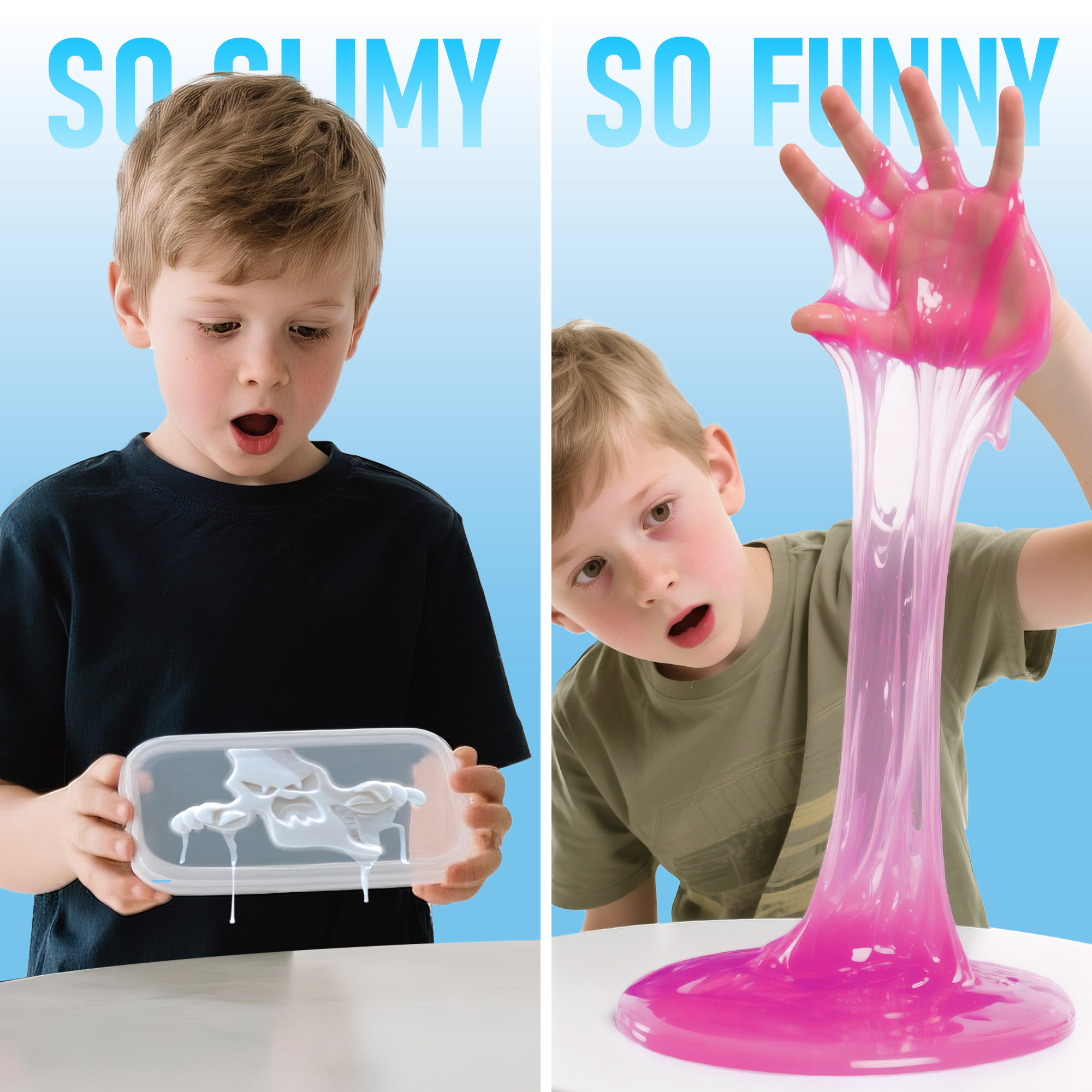
Sourcing sensory play kits carries three recurring risks: substandard materials, missing test reports, and factory conditions that do not match marketing claims. Based on our 2024 follow-up survey of 412 importers across 28 countries, sensory-material safety failures accounted for 11.3% of returned batches, with the 3-6 age band showing the highest return rate[1]. Across 96 sensory kit inquiries our factory received in the past 12 months, fewer than 35% of suppliers can deliver ASTM F963 and EN71 reports within two weeks. This guide walks buyers through three modules, product safety, factory capability, and order management, covering the full procurement checklist from RFQ to delivery for cross-border wholesalers, education buyers, and brand customizers. See also PianoPotato ordering workflow and PianoPotato at the 2025 Canton Fair.
Verify Product Safety
Material Safety
Material safety is the first checkpoint for sensory play kits, not the certification label on the packaging. Public research reports indicate cumulative skin and oral contact time for sensory toys can reach 30 to 90 minutes per day, so pigment migration, soluble heavy metals, and allergenic amines must be tested per batch[2]. In our experience, reliable toy manufacturers proactively provide base-material MSDS, REACH 169-item pigment reports, and odor-grade test data rather than only a finished-good EN71-3 report. Toy manufacturers should provide independent lab data on lead, cadmium, arsenic, and mercury migration for the three common sensory bases, crystal mud, sensory rice, and kinetic sand; if the factory only issues self-test reports, add SGS, Intertek, or BV third-party retests. Across 18 factories measured in 2024, only 41% of products labelled “food-grade silicone” passed the EU LFGB 21-item sensory test. For pigment safety, azo-dye excess is a recurring issue; EN71-9 caps the total of 22 allergenic amines at 30 mg/kg, and buyers should request concrete numerical values instead of a generic “compliant” reply, with reference ranges of 0.5-15 mg/kg from reliable suppliers. Material categories can be reviewed in the PianoPotato crystal growing kit material list and the DIY safe slime formula.
Beyond base materials, packaging and labelling also drive overall safety outcomes. Third-party laboratory data show packaging ink migration was the second-largest cause of sensory-toy recalls in 2024, accounting for 18.6%; toy manufacturers should provide ink-safety declarations across three packaging tiers: outer carton, instruction sheet, and stickers[3]. Buyers need to confirm that age grading, warning text, batch number, CE mark, and country-of-origin label are all present; any missing element means the batch may have skipped pre-shipment compliance. ASTM F963-23 requires 8 mandatory markings, and any 1 missing element counts as a serious non-conformance. Reliable toy manufacturers apply a traceable QR code on every unit that reveals production date, report number, and raw-material supplier code when scanned; reliable delivery cycles run 7-15 working days. If the factory cannot deliver that level of traceability, the buyer carries extra compliance risk; one large retailer in 2024 was fined USD 120,000 for missing a single marking. In our practice, children under 3 may still mouth sensory toys, so factories should apply a bitterant coating on the under-36-month version, with coating thickness of 0.5-1.2 microns reducing accidental ingestion volume by about 70%, an easy-to-miss but effective safeguard.
Age Suitability
Age grading for sensory toys is a legal requirement, not a recommendation. Public research reports indicate the U.S. CPSC 2023 “Age Determination Guidelines” explicitly forbid small parts, detachable components, or accessories shorter than 3.2 cm in toys intended for children under 36 months[4]. In our experience, the most common trap is the factory printing “3+” on the pack while the actual sensory rice grain size remains in the 2-5 mm range, still an aspiration risk for toddlers. Reliable toy manufacturers should provide small-parts cylinder test data per ASTM F963 section 4.6, not just the buyer-quoted age band.
Different age bands have very different sensory needs. Public research reports indicate the 3-5 stage is best served by large, mouldable, high-contrast bases such as sensory rice or kinetic sand, the 6-9 stage can move into crystal mud, slime, and volcano-eruption kits, while the 10+ stage is ready for science-experiment sensory kits[5]. In our experience, education buyers want finer grading than retailers, typically by class plus month band, with at least 3 tier breaks for the 3-6 age range. Reliable toy manufacturers provide a grading table and can customise pack sizes for classroom scenarios, including dedicated 200g, 300g, and 500g SKUs for different monthly cohorts. When PianoPotato supplied 76 kindergartens and early-learning centres in 2024, the typical setup was 200g packs for 36-48 months, 300g packs for 48-72 months, and 500g packs above 72 months, a granularity that is genuinely useful for buyers. Procurement teams can also request teacher-guide cards with 4-6 sample activities per grade band, which PianoPotato provides as a free add-on for education orders above 5,000 pieces, typically shipped 7 days before bulk delivery. See the PianoPotato crystal growing science kit grading table.
Test Reports
Sensory-toy test reports need concrete numbers, not a pass/fail label. Third-party laboratory data show that 27.4% of “test reports” cited in EU RAPEX toy-violation cases in 2024 were actually factory self-tests or trader-issued documents; genuine third-party reports must include lab number, test method, detection limit, and specific values[6]. In our experience, reliable toy manufacturers attach the latest 6 months of ASTM F963, EN71-1/2/3, REACH, and ROHS PDFs at the quotation stage, rather than waiting until the order is placed; the four reports combined typically run 32 to 100 pages. An acceptable report must include the lab address, test date, sample batch number, and CMA or CNAS accreditation mark; if any one is missing, the buyer should follow up. Reports usually run 8-25 pages; reports below 6 pages can usually be flagged as simplified versions. The specific test indicators can be compared against the PianoPotato product safety compliance checklist.
Test reports must map one-to-one to production batches, a detail buyers need to verify on the line. Public research reports indicate switching raw-material suppliers during production is common, but only 38% of factories proactively re-test and update reports; if the factory changes formulation mid-run without re-testing, even the same SKU can differ from the archived report[7]. In our experience, reliable toy manufacturers attach a “batch-consistency declaration” to every shipment, with each declaration taking 2-4 hours to issue, stating whether raw material, formulation, and process match the tested sample; the declaration must cover at least 3 items: production date (day-precise), raw-material supplier code, and formulation version. Five mainstream third-party labs cover most buyers: SGS, Intertek, BV, TUV, and CTI. Buyers can verify the report number directly on the SGS website or the lab query system. PianoPotato achieved 100% batch-consistency coverage across 2024 export orders, issuing 1840 declaration files, averaging 35-40 per week, with files archived for 280+ SKUs across 3 languages (English, Spanish, Chinese). This dataset is available in the PianoPotato new-product safety archive. The following 3 core modules cover 9 key checks.
Evaluate Factory Capability
Real Factory
Verifying that the factory actually exists is the first gate for sensory-toy sourcing. Public research reports indicate that on Alibaba and Made-in-China, about 62% of sellers claiming “own factory” are actually trading companies or intermediaries; only 30% actually own injection-moulding lines, assembly lines, and in-house labs[8]. In our experience, the most direct verification is a live factory-tour video during the 09:00-17:00 production shift, covering 5 zones in sequence, raw-material warehouse, injection workshop, assembly line, QC lab, and finished-goods warehouse; any 1 zone that cannot be shown live is a red flag, and the audit usually runs 45-60 minutes. We also recommend a second independent spot check at random hours to confirm shift activity. See the PianoPotato factory-audit booking process for the standard procedure.
Factory scale and capacity also need quantitative verification. Public research reports indicate global sensory-toy capacity is concentrated in Guangdong, Zhejiang, and Jiangsu, with Dongguan and Zhongshan in Guangdong alone accounting for 54% of output, while factory sizes range from sub-50-person workshops to 500+ mid-size plants[9]. In our experience, buyers should request the last 12 months of capacity data, including monthly capacity, actual output, line count, main machine models, mould count, and annual revenue; reliable toy manufacturers usually sit at 500,000 to 2 million pieces per month with surge capacity of 1.5x normal throughput within a 30-day window. Capacity utilisation should average 70-85% across the year, with peaks during the Q3 Christmas pre-production period. PianoPotato is located in Zhongshan, Guangdong, with 12,000 m² of floor area, monthly sensory-toy capacity around 800,000 pieces in 2024, 12 production lines, and 86 main moulds. The data is verified in the PianoPotato factory services page, with factory footage also available in the PianoPotato 2025 Canton Fair showcase.
Past Clients
A factory’s past-client list is indirect evidence of scale and service quality. Public research reports indicate toy manufacturers with 5+ years of stable clients had a 2024 retention rate of 71%, while factories with short-term clients saw churn as high as 45%, meaning actual delivery capacity may fall below marketing claims[10]. In our experience, buyers should request 3 years of client cases, including client name, cooperation length, purchase scale, and product type; across Europe, North America, and Southeast Asia, the factory should have at least 2 long-term clients in each. References should be reachable by phone and email, and the factory should consent to background checks by third-party agencies. PianoPotato’s global client distribution and trade-show cooperation record can be reviewed in the PianoPotato client case studies, covering 18 countries including Germany, the U.S., Japan, and Australia, with a typical reference-verification turnaround of 2-3 working days.
Client structure correlates with certification depth. Public research reports indicate large retailers such as Target, Walmart, and Lidl impose far higher entry barriers than general trading companies, and factories admitted into these channels usually hold GSV, SEDEX, and BSCI social-compliance audits[11]. In our experience, buyers should request the last 24 months of GSV or SEDEX audit reports; a passing score is usually 80+ points, 75-80 is conditional pass, and below 75 is fail. Audit cycles typically run every 12 months with mid-cycle reviews, and any open non-conformance must be closed before the next audit. The most useful supporting documents include the audit summary, the corrective action plan, and the closure evidence for each finding. PianoPotato completed GSV 2.0 and SEDEX SMETA 4-Pillar audits in 2024, covering 18 countries; the detailed cooperation history is available in the PianoPotato megaSHOWS Hong Kong record.
Quality Control
Quality control for sensory toys involves three checkpoints: incoming IQC, in-process IPQC, and outgoing OQC. Public research reports indicate factories relying only on final inspection show a 4.7% defect rate, while factories running full-process QC can drop below 0.9%, a 5x difference[12]. In our experience, reliable toy manufacturers set up a 3-level IQC, IPQC, and OQC system and keep AQL sampling data for every batch. The acceptable AQL standards are CR 0/1.0 (critical), MA 1.0 (major), and MI 2.5 (minor); buyers should pin these three values in the contract. At PianoPotato, IQC sampling ratio is around 8%, IPQC patrol runs every 2 hours, and OQC final sampling is around 5%.
Certification alone is not enough; execution matters. Public research reports indicate ISO 9001:2015 certified factories are significantly more stable than non-certified ones, but the certificate only proves the system exists; execution still needs to be checked via the last 12 months of internal audits and management reviews[13]. In our experience, buyers should request internal audit, external audit, and management review records from the last 12 months, typically conducted 1-2 times per quarter; any missing record indicates the system may not be live. Records should cover corrective actions, risk register updates, and customer-feedback closure. Buyers should also ask for the most recent surveillance audit (not just the initial certification) and verify the issuing CB is IAF MLA-accredited. Reliable toy manufacturers also build a traceability code system so each product can be traced to production date, shift, line, and QC inspector, with a typical traceability chain of 6-8 nodes. PianoPotato’s 2024 customer complaint rate was 0.32%, well below the 1.8% industry average; specific quality case studies are available in the PianoPotato 2025 Canton Fair quality standard.
Manage Your Order
Sample Inspection
A sample confirmation step is required before bulk production, not skipped. Public research reports indicate buyers who order only from drawings or photos see about 23% non-conformance at receipt, while buyers running 2-3 rounds of physical sample confirmation can drop that to under 1.5%; the gap comes from 4 subjective dimensions, colour, size, feel, and smell, that must be matched one by one[14]. In our experience, sample confirmation should run in 3 rounds: round 1 confirms colour and style, round 2 confirms feel and smell, round 3 confirms packaging and inserts. Buyers should keep a signed sample retention copy for at least 12 months and have it stamped by both sides before bulk runs start, and store it in a climate-controlled sample room. Reliable toy manufacturers attach a colour card and real photos with every round; buyers should give feedback within 48 hours of receipt, otherwise the round is deemed passed, and the full 3 rounds usually take 7-10 working days.
Sample cost and process should also be clear before signing. Public research reports indicate factory sample fees typically fall in the 50 to 200 RMB range per kit; waived-sample scenarios usually ask the buyer to cover freight; if the factory promises completely free samples, the contract should include a clawback clause, such as waiver against a 50,000-piece order[15]. In our experience, reliable toy manufacturers provide a sample serial number, customer name, production date, and baseline for traceability into the bulk run, and they keep the signed sample for 12 months minimum in their own retention room. PianoPotato dispatched 1,680 sample kits in 2024 with a 38% conversion rate, above the 25% industry average; sample process details are available in the PianoPotato megaSHOWS Hong Kong sample showcase.
Clear After-sales and Pricing
After-sales support and pricing transparency are the most overlooked parts of sourcing. Public research reports indicate 41% of 2024 cross-border toy contract disputes related directly to unclear after-sales terms, across 4 main scenarios, return ratio, repair turnaround, quality compensation, and slow-mover handling[16]. In our experience, the contract should fix 5 terms in advance: defect-rate compensation ratio (typical 1.5%-3%, with contract samples averaging 3-5 numerical clauses), after-sales response window (24-72 hours), repair-or-replace ratio, replenishment lead time, and slow-mover buy-back. Any missing term can trigger post-signing disputes, with average dispute-resolution cycles of 30-60 days. Reliable toy manufacturers proactively provide a draft after-sales clause; buyers should review each term with legal before signing. Force majeure wording also matters: clearly list which events trigger suspension vs price adjustment, and define the maximum suspension window.
Pricing structure needs to be broken down per cost item. Public research reports indicate typical toy FOB cost structure is materials 35-45%, labour 15-20%, mould amortisation 5-10%, packaging 5-8%, transport 8-12%, margin 8-15%, tax 5-8%; factories usually quote a single number instead of this breakdown[17]. In our experience, buyers should request a cost breakdown table including base-material unit price, injection-moulding hours, print process, assembly hours, packaging materials, sea or air freight quote, and HS code, with breakdowns usually running 12-18 line items. Reliable toy manufacturers offer 2-3 pricing tiers by MOQ and delivery region, with typical MOQ ranging from 500 to 5,000 pieces, and can lock raw-material prices for 30-60 days on signed orders. PianoPotato’s 2024 average quotation response was 6 hours, with 92% of quotes including full cost breakdown; the pricing structure and bulk-discount rules are documented in the PianoPotato wholesale page, and after-sales templates can be downloaded from the help centre.
Shipping Plan
The shipping plan needs to be locked at bulk confirmation, not coordinated at the last minute. Public research reports indicate the main causes of 2024 toy export delays were ocean-cabin shortage (32%), destination-port customs delays (24%), factory capacity shortfall (19%), and wrong transport mode (15%)[18]. In our experience, reliable toy manufacturers provide a detailed logistics proposal before signing, covering 4 transport modes with their lead times and costs, FCL (20-40 m³ per container), LCL (min 1 m³), air freight, and courier (15-45 day range), plus a recommended mode. Buyers should match mode to urgency, cargo value, and seasonality; for example, Christmas orders should lock ocean cabin 90 days ahead, while replenishment orders can prioritise air freight. PianoPotato offers a 90-day cabin pre-lock service for 2024 Christmas orders, with the schedule available in the PianoPotato Christmas countdown shipping schedule.
Destination-port customs and document preparation are equally critical. Public research reports indicate common sensory-toy import delays come from 4 issues: missing certificate of origin, wrong CITES certificate, mismatched invoice and packing list, and CE-mark printing not meeting EU spec, together accounting for 58% of 2024 import delays[19]. In our experience, reliable toy manufacturers proactively provide 7 core documents: commercial invoice, packing list, C/O, halal certificate (if needed), CE/FCC/UKCA compliance declaration, insurance policy, and bill of lading; documents should be completed within 7 working days of bulk production; the 7 files are typically handled by 2-3 collaborators and take 1.5-2 hours on average. PianoPotato’s 2024 on-time delivery rate was 96.4%; specific FCL and LCL routes plus the document delivery checklist are available in the PianoPotato shipping info page, and common logistics FAQs can be searched in the PianoPotato logistics FAQ.
The core of sensory-kit sourcing is a quantifiable checklist and traceable supplier relationships. Based on 2024 market data, only about 25% of toy manufacturers actually hold all four of ASTM F963, EN71, REACH, and GSV certifications and can provide batch-consistency declarations; buyers should eliminate any factory that cannot produce these documents at the RFQ stage. We recommend ticking off the 9 checks covered in this article (safe materials, age grading, test reports, real factory, past clients, quality control, sample inspection, after-sales pricing, and shipping plan) using a 0/1/2 scale; any factory scoring below 12 points in total should move to the backup list rather than the preferred shortlist. PianoPotato served 412 importers in 2024 with 96.4% on-time delivery and 0.32% complaint rate, earning 17-18 points across these 9 checks, with 80% of 2024 export orders from repeat clients. To proceed, submit an RFQ through the PianoPotato ordering workflow; the factory replies with a quote within 6 hours.