
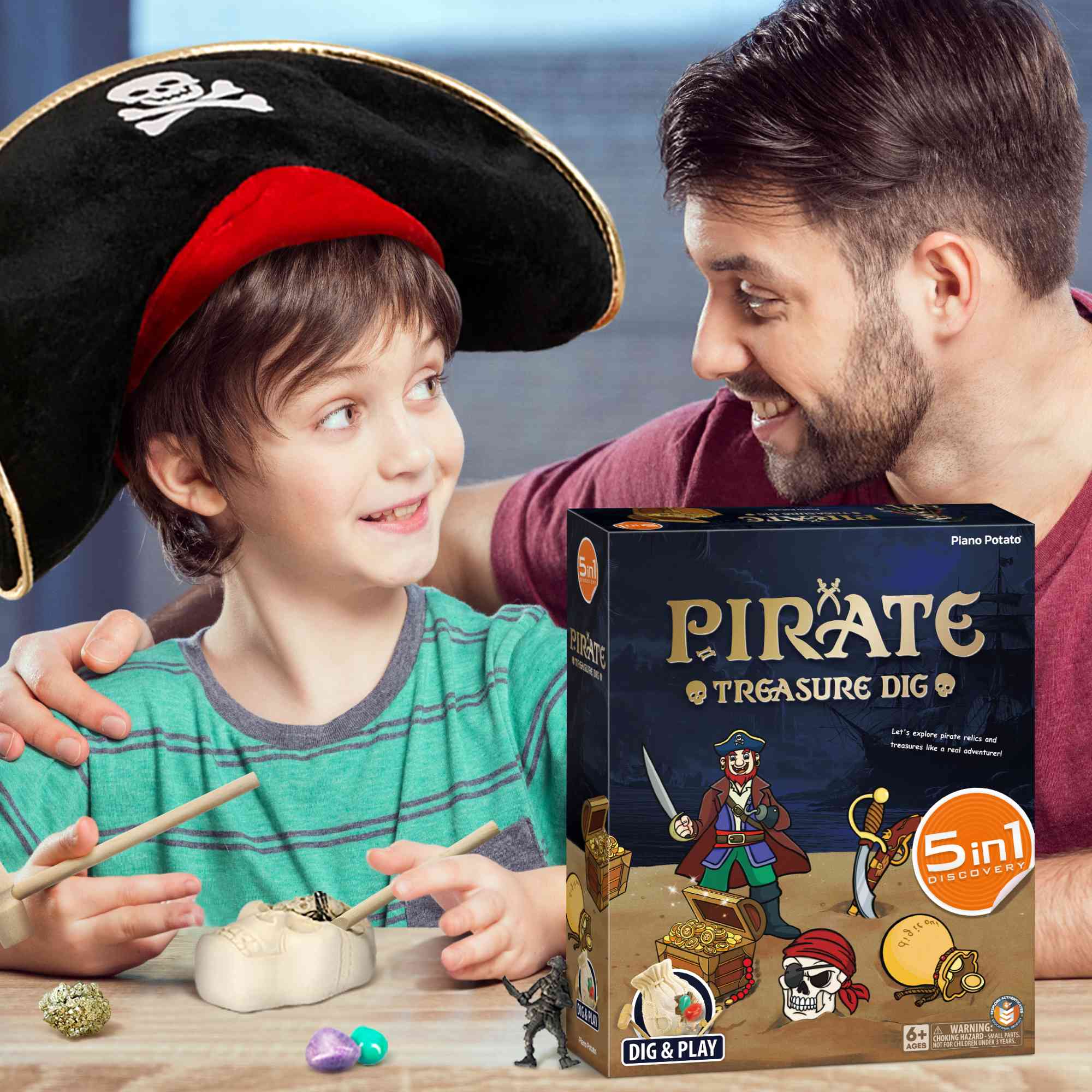
STEM toys can help children practise problem solving, focus, planning, early math, spatial skills, hand control, and active screen-free play. The best toys ask children to build, test, compare, and improve instead of only pressing a button or copying one fixed answer.
STEM stands for science, technology, engineering, and mathematics. These subjects often work together when children solve a problem, gather information, test an idea, and use the result to decide what to do next.[1]
A STEM toy does not have to be electronic or expensive. Blocks, puzzles, cardboard, tape, cups, toy cars, gears, measuring tools, circuit sets, and coding games can all support useful learning. What matters is what the child does with the toy.
No toy can guarantee better grades, a higher IQ, or a longer attention span. Play can support several areas of child development, but the result depends on the child’s age, interests, current ability, repeated use, and the help provided by adults.[2]
What Makes a Toy a STEM Toy?
A useful STEM toy gives the child a problem, materials to control, and a result that can be seen or measured.
For example:
- A block tower stands or falls.
- A paper bridge holds weight or bends.
- A circuit lights a bulb or stays dark.
- A marble reaches the end of a track or stops halfway.
- A coded toy follows the route or turns in the wrong direction.
These results give the child a reason to ask what happened and try a different method.
A toy may offer little STEM learning when it performs nearly every action by itself. Flashing lights, sounds, and movement can be entertaining, but they do not automatically require the child to plan, measure, test, or solve a problem.
Use four simple questions when judging a toy:
- Does the child make important choices?
- Can the child see whether the idea worked?
- Can the design or method be changed?
- Can the toy be used again in a different way?
Problem Solving
STEM toys often give children a problem without showing the full answer.
A bridge may collapse, a puzzle piece may not fit, or a robot may move in the wrong direction. The child must look at the result and decide what to change.
A simple problem-solving process has five steps:
- Notice what went wrong.
- Choose a possible cause.
- Change one useful part.
- Test the new idea.
- Compare the result with the first attempt.
Suppose a child places one sheet of paper across two books to make a bridge. The paper bends after several coins are added. The child might fold the paper, shorten the gap, add support underneath, or change the shape of the bridge.
The finished bridge is not the main lesson. The useful part is understanding why one version held more weight than another.
Parents can help without rebuilding the project. Ask:
- Which part moved first?
- What do you think caused that?
- What could you change?
- What should stay the same?
- How will you test the new idea?
Give the smallest amount of help that allows the child to continue. First wait. Then point to the problem area. Ask one question. Offer two choices if needed. Demonstrate one step only when the child still cannot begin or when safe tool use must be shown.
Focus
Many STEM activities require children to keep one goal in mind while completing several steps.
A puzzle may require the child to compare shapes, remember which pieces have already been tried, and continue searching. A construction set may require the child to find parts, follow a sequence, check mistakes, and return to the main goal after an interruption.
This gives children practice with:
- Remembering the goal
- Following the next step
- Ignoring unrelated distractions
- Checking progress
- Stopping an action that is not working
- Trying a different method
The task must be at the right level. A toy that is too easy may require little thought. A toy that is too hard may cause frustration before useful learning begins.
A task may be too easy when the child:
- Finishes it without making choices
- Repeats a familiar action without checking the result
- Loses interest as soon as the first model is complete
A task may be too hard when the child:
- Cannot understand the goal
- Needs an adult to complete every step
- Changes parts at random without looking at the result
- Remains upset after the task has been made simpler
A suitable task still includes mistakes, but a small hint helps the child continue.
Do not assume that focus on one favourite toy will improve attention in every situation. A child may spend a long time building a vehicle but still find reading or classroom work difficult. STEM toys provide practice during a specific activity; they are not a treatment for attention problems.
Screen-Free Play
STEM toys can give children an active alternative to watching videos, scrolling, or using apps that require few choices.
Hands-on play requires the child to move objects, wait for a result, and deal with mistakes. A child building a ramp must choose its position. A child working with gears must connect the parts. A child measuring water must pour carefully and compare amounts.
However, the presence of a screen does not decide whether an activity is useful. A child may use a tablet to create code, design a model, or control a robot. A toy without a screen may still do all the work after one button is pressed.
The American Academy of Pediatrics recommends looking beyond one screen-time number and considering the content, purpose, setting, and effect of media use. Families should also protect time for sleep, movement, reading, conversation, and play.[3]
Useful screen-free STEM activities include:
- Building a tower that holds a book
- Making a paper bridge
- Testing which objects float
- Designing a marble run
- Sorting leaves by shape
- Measuring furniture
- Making paper airplanes
- Creating a cardboard maze
- Building a shelter for a toy animal
- Testing a toy car on different surfaces
Do not present screen-free play only as a punishment after removing a device. Give the activity its own goal, such as “Can you build a bridge that holds 10 coins?”
Planning, Flexible Thinking, and Creativity
A STEM project often starts with a goal. The child must choose materials, decide what to do first, and work out how the result will be tested.
For example, a child building a shelter for a toy animal may need to decide:
- How large the shelter should be
- Which materials to use
- How the walls will stay upright
- Whether the roof can hold a small weight
- How the finished shelter will be tested
Younger children can explain the idea aloud or point to materials. Older children can draw the design, label parts, or write a short materials list.
The first plan does not have to work. If a wall falls, the child may widen the base, add support, shorten the wall, or use a different material. Trying a new method instead of repeating the same failed action is flexible thinking.
Open-ended activities also support creativity because several answers may work. One shelter may use less material. Another may be stronger. A third may have more space inside.
A clear limit can make a creative task easier to begin. Instead of saying “Make anything,” try:
- Build a shelter with paper, tape, and 10 craft sticks.
- Make a boat from one sheet of foil.
- Build a vehicle that carries five small toys.
- Design a tower that stays upright in air from a fan.
- Make a maze with two possible routes.
Give children time to form their own ideas before showing a finished example. If they need visual help, show several possible designs rather than one model that looks like the only correct answer.
Spatial Skills
Spatial skills help children understand shape, position, direction, size, and how separate parts fit together.
Children use these skills when they:
- Turn a puzzle piece
- Copy a block model
- Fit gears together
- Read a simple map
- Build from a picture
- Predict whether an object will fit
- Compare the front, side, and back of a model
Research has found links between children’s construction play and measures of spatial and mathematical ability. This does not mean every building toy produces the same result, but it supports the value of activities that require children to arrange, turn, and combine parts.[4]
Parents can use simple spatial words during play:
- Turn the piece around.
- Place it under the long block.
- The wheel is beside the blue part.
- The opening is too narrow.
- The support is behind the wall.
Use these words naturally. Do not interrupt every action with a question.
Hand Control
Many STEM toys require small and controlled hand movements.
Children may stack blocks, place pegs, connect pieces, turn gears, pour water, draw a plan, use tweezers, or hold a ruler.
These actions give children practice with hand-eye coordination and fine motor control. However, the pieces must be manageable. If a child spends all the time struggling to connect tiny parts, there is less time to think about the design.
Suitable materials include:
- Large blocks, nesting cups, and chunky puzzles for toddlers
- Interlocking blocks, clay, pegboards, and large gears for preschoolers
- Smaller construction parts, rulers, child-safe tools, circuits, and model kits for school-age children
Children who find small pieces difficult may benefit from larger parts, a non-slip mat, a stable table, or fewer pieces placed out at one time.
STEM toys should not be used to diagnose or treat a movement or hand-control problem. Parents who notice ongoing difficulty with normal daily tasks should speak with a qualified professional.
Early Math
Hands-on play can make some early math ideas easier to see and touch.
A child building with blocks may count pieces, compare heights, measure distance, identify patterns, and check whether both sides are equal.
STEM activities can introduce:
- Counting and grouping
- More and less
- Longer and shorter
- Heavier and lighter
- Full and empty
- Shape and size
- Patterns and sequences
- Distance and height
- Measurement and simple data
Math is more useful when it answers a real question. A child may not want to measure a random line but may want to know whether a toy bed will fit inside a cardboard house.
Useful questions include:
- How many pieces did you use?
- Which tower is taller?
- How many more pieces are needed?
- Can you make both sides the same?
- Which container holds more?
- How far did the car travel?
For example, a sample bridge test might produce results of 7, 12, and 18 coins for three different designs. The child can compare the results and work out that the strongest design held 11 more coins than the weakest design.
These numbers are only an example, not a standard result. Actual results depend on the paper, gap, coin size, folds, and test method.
Ask one useful question, then give the child time to think. Continuous questioning can interrupt the activity.
Science Skills
Science starts with a clear question, a prediction, and a fair test.
In a ramp test, use the same toy car, ramp, floor, starting point, and release method. Raise one end of the ramp to change the angle, then measure how far the car travels.
The child is learning to:
- Ask a question
- Make a prediction
- Keep most conditions the same
- Change one main condition
- Observe the result
- Record what happened
- Repeat the test
Exploring and testing are not exactly the same. During free exploration, a child may change the car, ramp, wheels, and surface. During a fair comparison, most of these conditions should stay the same.
Simple investigations include:
- Which material absorbs the most water?
- Which objects are attracted to a magnet?
- Which paper airplane travels farthest?
- Does a wider base help a tower stay upright?
- Which material slows the melting of ice?
- Does adding weight change how far the same toy car travels?
A prediction does not need to be correct. The purpose of a test is to find out what happens, not to prove that the child was right.
One result may be accidental. Repeat a simple test three times when possible. Younger children can record results with drawings, stickers, or blocks. Older children can use a table and write measurements.
Language, Patience, and Teamwork
STEM play gives children useful reasons to explain ideas and results.
Helpful words include:
- Stable
- Flexible
- Rough
- Smooth
- Measure
- Compare
- Rotate
- Predict
- Observe
- Increase
- Reduce
Children can use simple sentence patterns:
- I think this will happen because…
- I changed this part.
- I kept these parts the same.
- The second design worked better because…
- The result did not match my prediction.
- I need another test.
STEM projects also create small failures. A piece does not fit, a structure breaks, or a circuit stays dark. These moments allow children to pause, check the problem, and try again.
Do not force a child to continue when tired or overwhelmed. Reduce the number of pieces, make the goal smaller, complete the first step together, or take a break.
When children work in a group, simple roles can prevent one child from taking over:
- Builder
- Materials manager
- Tester
- Measurer
- Recorder
- Designer
If children disagree, test both ideas. Use the result rather than the loudest voice to decide which design better meets the goal.
Real-Life STEM
Children do not need a special kit to practise STEM skills.
Daily activities already include science, math, and problem solving:
- Measuring ingredients while cooking
- Comparing package sizes
- Sorting laundry
- Reading a simple map
- Checking room temperature
- Growing seeds
- Repairing a cardboard box
- Organizing objects by size
- Measuring whether furniture fits in a space
Help children connect toy activities with real life. After building a bridge, look for supports on a real bridge. After testing a ramp, compare it with a playground slide. After using gears, look at a bicycle chain.
STEM Toys for Ages 6–8
Children in this age range may begin to follow several steps, organize parts, measure results, and keep a simple record.
Useful options include:
- Construction sets
- Beginner circuits
- Logic games
- Mechanical kits
- Tangrams
- Measuring tools
- Beginner microscopes
- Strategy games
- Programmable toys
- Age-appropriate science kits
Ask children to predict, test, and compare. They can build three paper bridges, add identical coins, and record how much weight each design holds.
Keep coins and other small testing materials away from younger siblings.
STEM Toys for Ages 9–12
Older children may be ready for longer projects and systems with several connected parts.
Useful options include:
- Robotics kits
- Electronics sets
- Coding tools
- Advanced construction sets
- Mechanical models
- Engineering kits
- Age-appropriate chemistry sets
- Design software
- Strategy games
Look for kits that allow changes after the first model is complete. A robotics kit has more repeat value when the child can change the route, sensors, code, or structure.
Digital tools can be useful when children actively code, model, or design. They should still have time for physical play, movement, conversation, and hands-on projects.
Chemistry and electronics kits must be used according to the instructions. Children should not add household chemicals or change an experiment without direct adult approval.
How to Choose a STEM Toy
Always follow the product’s safety age label. Within that safe age range, choose the difficulty based on the child’s experience, interests, and ability.
Before buying, check the following:
- Active use: The child should control important parts of the activity.
- Clear result: The child should be able to see whether the idea worked.
- More than one use: The toy should allow new designs, rules, or challenges.
- Suitable difficulty: The child should be able to start with limited help.
- Strong interest: The theme should connect with something the child already enjoys.
- Simple setup: The toy should not require so much preparation that it stays in a cupboard.
- Safe storage: Small pieces should be easy to count and keep away from younger children.
- Honest claims: Avoid products that promise higher IQ, guaranteed grades, or medical benefits.
Different toys support different kinds of practice:
- Blocks support structure, balance, and spatial thinking.
- Puzzles support visual comparison and rule-based thinking.
- Ramps support motion, measurement, and testing.
- Gears support movement and cause and effect.
- Circuits support connections and fault finding.
- Coding toys support sequencing and correcting errors.
- Measuring tools support quantity, units, and simple data.
How to Check Online Toy Claims
When reading toy guides or product pages, check who created the content, whether safety information is included, and whether large claims are supported by reliable sources.
A trustworthy page should explain what the child actually does instead of only repeating words such as educational, brain-building, or genius. Guangsuan’s guide to E-E-A-T explains why clear experience, expertise, and source support matter when judging online content.
A useful toy page should answer practical questions: Is the toy safe for the stated age? What does the child control? Is adult supervision needed? Can the parts be reused? Is the challenge likely to be too easy or too hard?
How to Use a STEM Toy
A simple play session can follow three stages:
- Choose one clear goal.
- Allow the child to build and test with limited interruption.
- Talk about what changed and what could be tried next.
Watch before helping. The child may already be testing an idea.
Step in when the child uses materials unsafely, cannot understand the goal, repeats the same action without noticing the result, or directly asks for help.
After a test, ask:
- What did you change?
- What happened?
- Why do you think that happened?
- What will you try next?
Signs of useful learning include:
- Making a prediction
- Noticing an unexpected result
- Comparing two designs
- Repeating a test
- Explaining a change
- Asking a new question
- Needing less help over time
A failed design can still be useful when the child understands what happened and can suggest a reasonable next step.
Paper Bridge Activity
Place two books 20 cm apart. Lay one sheet of paper across the gap and add identical coins one at a time until the bridge bends or falls.
Test three designs, such as flat paper, folded paper, and accordion-folded paper. Keep the paper size, book gap, and coins the same. Repeat each design three times and record the highest number of coins held.
This activity practises planning, measurement, fair testing, and comparing results.
Foil Boat Activity
Give the child one 30 cm by 30 cm sheet of aluminum foil. Make a boat and place it in a bowl or container of water.
Add identical coins one at a time until water enters or the sides collapse. Test three boat shapes using the same amount of foil. Keep the coin type and water container the same.
Compare a wide boat with a narrow boat and look at how the position of the coins changes balance.
Ramp Test Activity
Use the same toy car and the same piece of cardboard for every test.
Raise one end of the ramp to 10, 20, and 30 cm. Release the car from the same starting line without pushing it. Test each height three times and record the distance travelled.
After comparing ramp positions, keep the ramp at one height and compare a smooth floor with a rough surface such as a towel.
The numbers are suggested test settings, not expected results. Families can use smaller heights when space is limited.
Ice Test Activity
Use similar-sized ice cubes and wrap them in different materials, such as paper, foil, cloth, or bubble wrap.
Place the samples in the same location. Check them after 5, 10, and 15 minutes. Record whether each cube is mostly solid, partly melted, or mostly melted.
This activity introduces insulation, heat transfer, prediction, and fair testing.
Wind Tower Activity
Build a tower from cups or blocks and place it about 1 metre from a fan.
Keep the fan at the same speed and distance. Test a narrow base, a wide base, and a tower with extra supports. Test each design three times.
The child can also measure the tallest tower that stays upright for 10 seconds.
Water Filter Model
Place cloth, clean craft sand, and gravel in a bottle prepared by an adult. Use the same depth of each material for every test.
Pour 200 mL of test water containing safe materials, such as small paper pieces or a little cocoa powder, through the layers. Record how long the water takes to pass through and compare its appearance before and after filtering.
This activity only shows how some visible particles can be trapped. Clear-looking water may still contain germs, chemicals, or dissolved material. A simple classroom filter does not make drinking water.[5]
An adult must cut the bottle and cover sharp edges. Do not use soil or water collected from gardens, drains, ponds, or unknown outdoor sources. Children must not taste the water.
STEM Toy Safety
Toy safety is not a small issue. In 2024, an estimated 267,100 toy-related injuries for all ages were treated in U.S. hospital emergency departments. Children aged 14 or younger accounted for 68% of these injuries, and children aged four or younger accounted for 34%. About 45% involved the head or face.[6]
These figures describe injuries associated with toys; they do not mean that the toy itself caused every injury. Falls, unsafe use, unsuitable age choices, missing supervision, and damaged products may also be involved.
Follow the safety age label even when a child appears advanced. The label may be based on choking, battery, magnet, chemical, or tool risks rather than the difficulty of the activity.
Check toys for:
- Small parts and small balls
- Loose magnets
- Accessible batteries
- Cracked plastic
- Sharp edges
- Loose screws
- Damaged wires
- Long cords
- Chemicals and heating parts
- Fast-moving projectiles
Small parts can cause choking, especially in children under three and in older children who still place objects in their mouths. Follow the product’s choking warnings and age grading.[7]
High-powered magnets can cause severe internal injury when swallowed. Two magnets, or a magnet and another metal object, can attract through the wall of the intestine. If a child may have swallowed any magnet, seek immediate medical help.[8]
Button and coin batteries can burn through a child’s throat or esophagus in as little as two hours. From 2011 through 2021, the CPSC recorded 27 deaths and an estimated 54,300 emergency-room-treated injuries linked to swallowed or inserted button and coin batteries.[9]
Battery compartments should require a tool or another secure action to open. If a battery may have been swallowed or placed in the nose or ear, seek emergency medical help immediately.
Some sensory or science kits contain water beads. These beads can grow to about 100 times their original size after absorbing water. CPSC data show that nearly 7,000 water-bead ingestion injuries were treated in U.S. emergency departments from 2018 through 2022.[10]
Keep water beads away from babies and young children. They may be difficult to see on an X-ray and can continue expanding inside the body.
Do not allow children to handle loose batteries. Stop using a toy when the battery cover is broken or a magnet becomes exposed.
Follow all instructions for science and chemistry kits. Do not add household chemicals. Use eye protection when required and wash hands after experiments.
Check recalls before using secondhand toys or old kits. Do not use a product when warning labels, instructions, battery covers, or safety parts are missing. The U.S. Consumer Product Safety Commission provides a searchable recall database.[11]
Limits of STEM Toys
STEM toys are one part of healthy play. Children also need reading, conversation, outdoor movement, sleep, pretend play, art, music, social contact, and unstructured free time.
Do not turn every activity into a lesson. Children sometimes need to explore materials without a goal, record, or adult question.
STEM toys should not be used as treatment for attention problems, learning difficulties, movement problems, or developmental conditions.
Adjustments may help children with different needs:
- Use larger pieces when small connections are difficult.
- Use picture instructions instead of long written directions.
- Show one step at a time.
- Allow drawing or pointing instead of a long spoken explanation.
- Choose quiet toys for children who are sensitive to sound.
- Place fewer pieces on the table at one time.
Choose themes by interest rather than gender. Animals, cooking, art, music, vehicles, buildings, and nature can all lead to useful STEM play.
Do STEM Toys Improve Grades?
STEM toys may provide practice with planning, measurement, spatial thinking, sequencing, and problem solving. They cannot guarantee higher grades.
School results also depend on teaching, sleep, health, language skills, motivation, and support at home.
Are Expensive STEM Toys Better?
No. Blocks, cardboard, tape, cups, foil, measuring tools, and toy cars can support useful STEM activities.
Judge a toy by the choices the child makes, the result the child can see, and the number of ways the materials can be reused.
How Long Should Children Play?
There is no single correct length.
Take a break when the child is tired, repeatedly upset, or no longer interested. A short session with active testing can be more useful than a long session in which the child is no longer thinking about the task.
Should Parents Correct Mistakes?
Correct safety problems immediately. For normal design mistakes, give the child time to see the result.
When help is needed, point to one area, ask one question, or demonstrate one step instead of replacing the entire design.
What If a Child Only Copies the Instructions?
Following instructions can still teach sequencing, matching, and assembly.
After the model is complete, ask the child to change one feature, improve one function, rebuild it with fewer parts, or make a different object with the same pieces.